
By Katy Cattell
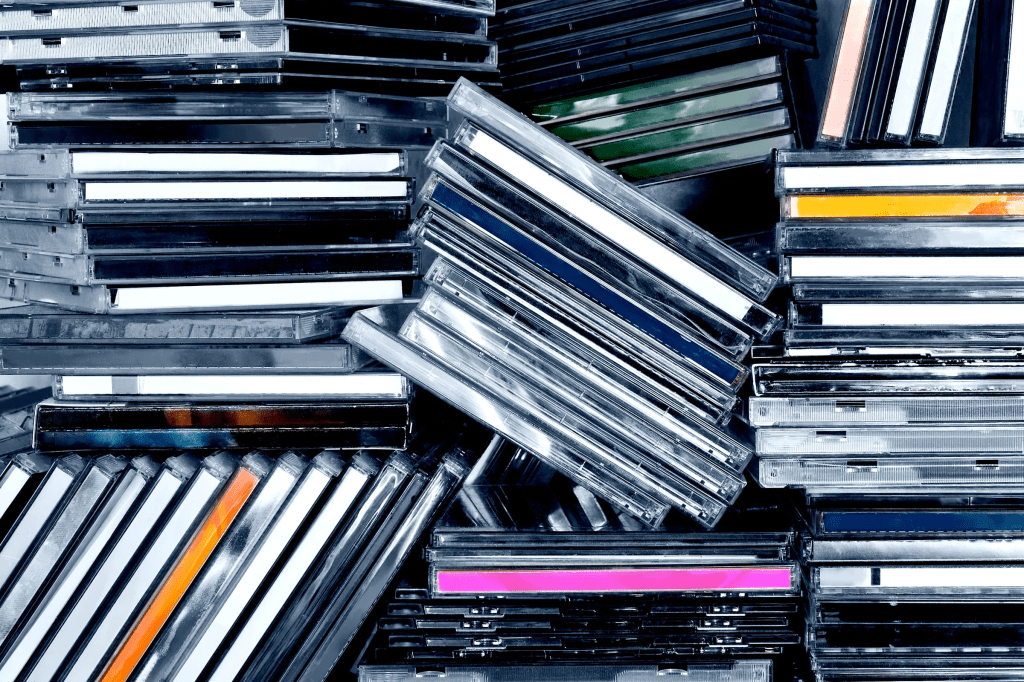
It felt like I was on the verge of suffocation, being pushed around by aggressive shoppers crowding to each retail store on Black Friday at the King of Prussia Mall. With no quiet corner to run off to, I sought refuge in The Rock Shop, a record store that I could peacefully browse for a few hours while I waited for my family to finish shopping. As I lurked around the store, I happened to peruse the CD section, and at last I could feel my racing nerves put to a rest as I saw a bunch of my favorite albums peeking through the endless rows of CDs. While I was still physically present at the KOP Mall on Black Friday, my mind was in another place, in the car jamming out to Talking Heads’ Stop Making Sense with my dad, admiring the sunset and feeling the warm summer breeze as I daydreamed to Cocteau Twins’ Heaven or Las Vegas, or watching the sodium lights loom over me in the dark as I listened to The Cure’s Disintegration. After spending an hour carefully curating my selection of albums, I had a thick stack of 16 CDs, the beginning of my collection that would quickly grow to 200 over the span of 4 months.
Like many people who appreciate music, I had fallen in love with the hobby of collecting physical media, in my case, CDs. It’s funny to think about, because with how far streaming has advanced these days, I didn’t see a point in collecting albums, other than as a way for pretentious music snobs to assert dominance onto one another.
The first obvious advantage of collecting CDs is that once you purchase it, you are guaranteed permanent ownership. In the age of listening to music digitally, when people pay for a streaming subscription, the music is loaned to them temporarily. This means that at any given moment, their favorite album could be removed from the streaming website, and they would lose access to listen to it through their subscription. Many releases get removed from streaming sites due to complications with the music label, and some music artists are also removing their catalog out of protest against Spotify’s controversial business practices. With physical media, once you own the record no artist or label company is able to remove the album from your collection. For example, this morning I wanted to listen to Brian Eno’s Before and After Science. To my surprise, a majority of Brian Eno’s discography was recently removed across all streaming services. Luckily, I own the album on CD so I can still legally listen to the album on my CD player. Even if albums are available to stream, they might only have the remastered versions of the songs, which are infamous for compressing the original mixes, making them less enjoyable to listen to. However on CDs, if you purchase CDs based on the original master tapes, you don’t have to worry about these unwanted remasters.
Another benefit of collecting CDs is that you can listen to artists that aren’t on streaming services. For example, the Comsat Angels are an obscure 1980s post-punk band who are not available on streaming platforms. While I can find some of their albums on YouTube, they’re all unofficial low quality vinyl rips with some songs missing. Fortunately, they have released their music in physical media formats, which can be found on secondhand websites such as ebay and discogs. By owning their official releases of Waiting for a Miracle, Sleep No More, and Fiction on CD, I get to listen to these albums in their entirety in lossless audio quality.
Along with the practical advantages of getting to listen to high quality audio mixes of songs without the fear of having it removed from your listening library, collecting physical media has some sentimental benefits as well.
When music is stored on a single disc as opposed to a digital cloud, it feels more valuable, making the listening experience feel more sacred. CDs have this kind of sentience, not the threatening AI sentience that a streaming service algorithm can have, but the simple kind that a plant has. Once a CD breaks, it can’t play music anymore, making it practically dead. As a result, each spin feels extra special because it feels like it is alive in a way. I get this strange maternal feeling over my CDs because of how easily damagable they are, especially over my rare out-of-print CDs that are difficult to replace.
CDs also transform music listening into a slow and deliberate experience. Along with the album art and disc full of music to listen to, many CDs also come with exclusive booklets filled with liner notes from the artist which allow you to connect with the music on a deeper level. There is also the lengthy process of deciding which album you want to listen to, and taking the time to manually insert the disc into the CD player. This extra effort forces you to choose what music you want to listen to intentionally, rather than just mindlessly clicking on an album to stream on your device.
The thrill of the hunt is another great appeal that comes with CD collecting, as you can never fully anticipate what kinds of CDs you’re going to find, and where you’ll end up finding them! Over winter break, after a disappointing trip to the CD rack at goodwill, I decided to skim through the store one more time before calling it a day. Never did I imagine that I would find a CD copy of King Crimson’s Discipline, one of my all time favorite albums, hiding in the Christmas decorations section!
Many of the other delights that come with collecting CDs, or any kind of physical media in general are the opportunities for self-expression. With music already being a reflection of our identity, it’s satisfying getting to manifest that part of ourselves physically through tangible stacks of CDs that you can display on your shelf. Sometimes collecting CDs gets you to express yourself by connecting with other people, whether it’s an in-person interaction with the cashier praising your selection of CDs, or a lovely little note found in an ebay order. One time, I purchased a CD of Slowdive’s Souvlaki from a man who saw them in concert in 1993, which made it seem like he was passing his own memories on to me. It’s that bonus human engagement you get from purchasing physical media that you can’t get from purchasing a streaming subscription.
Whether its customers ravenously flocking from store to store on Black Friday, or people mindlessly listening to what an AI algorithm recommends, we live in an age where rapid mindless consumption is normalized. Collecting CDs has taught me the importance of slowing down, and enjoying life’s pleasures with intention. Not only with what album I have spinning, but with the memories and people that I associate with it.

