
Gita Passi
As a digital arts and media design major, I’m constantly in a creative and right-brained mind set. I rely on my emotions to guide my artistic practices and provide inspiration. Basically: I am not as in touch with the analytical side of my brain in my practice.
With that being said, I did have to take one microeconomics class for my original major (communications!), and I ended up walking away with a handful of unexpected life advice. It can be really hard to make big decisions and think logically about things, especially if emotions are high and you’re feeling overwhelmed.
Economics is all about decision making. As college students, many of us are learning how to live on our own for the first time; we’re experiencing first-hand how life is full of trade-offs and scarcity. We have a slew of decisions that we have to make on a daily basis (some bigger than others).
Applying certain economic terms and methodologies to your own life can surprisingly make things seem way less daunting. I mean, if it works for the whole country’s money system, then it has to work for me, right? (Right??)
I’m not really qualified to be talking about anything econ related, and I know that a lot of what I’ll be talking about is an extremely simplified version of things – but I think that should be enough to get you up to speed:
Cost Benefit Analysis
I find myself saying this over and over again in life: Is the benefit worth the cost?
After a little Google search, I found that the proper term is “cost-benefit analysis.” For our purposes, you can replace anything having to do with money with “value.” What value do you give certain experiences/relationships? This can help you determine what or who is worth spending your time on/with.
You can even make a little equation and add up all the “costs” of your big decision (maybe give them some numerical value?) and subtract that from the “benefit.” If the total of the costs are greater than the benefit, then that choice might not be something you want to move forward with.
Let’s consider how we would apply this when trying to save a friendship. Is the benefit of that friendship worth the cost of opening up old wounds to seek resolution? Does the potential of continuing the friendship outweigh the cost of continued toxicity?
Sunk Cost
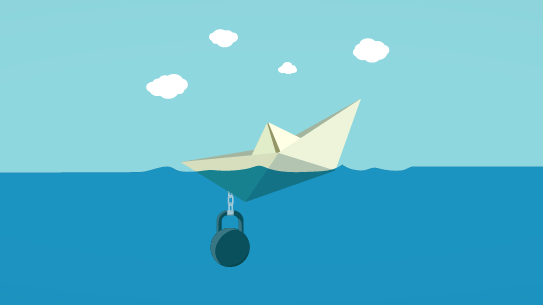
Sometimes jumping ship is the best option. This can be an especially difficult pill to swallow if you’ve spent a lot of time or energy on something/someone already. It might seem like all of that time/energy would be “wasted” if you gave up now.
Consider the sunk cost fallacy: we’re more likely to continue doing something that is no longer in our best interest simply because we’ve already invested so much into it already.
Sometimes I have trouble letting go of a design or a drawing even if it would make much more sense to start over fresh – all because I’ve already spent so much time on the current version.
It’s important to remember that spent time/money can’t be recovered, regardless of whether you stop or continue doing what you’re doing. Rationally, that stuff from the past shouldn’t be considered in the decision-making process for future things. It’s important to focus on future benefits, since those have yet to be gained. (Hopefully that made some kind of sense. I almost confused myself.)
Opportunity Cost
Basically, everything is a trade-off, and it’s tempting to pick the more pleasurable activity in the moment rather than the activity that makes more sense in the long run. An opportunity cost is what is lost when you choose to do one activity over another.
With that logic, everything you do has an opportunity cost because you can’t do everything at the same time (if only…). You just have to figure out what you’re willing to give up in exchange for the thing you’re going to pursue.
A pretty typical textbook example is: what do you give up when you chose to hang out with friends on a weekend when you have a big test the next day? Obviously, you’ll be giving up hours of studying, and in the long run, a higher test score. That’s what we’re dealing with here. The point of this is to help economists make better choices that will benefit them in the long term. It’s all about the long term, people.
Still With Me? Good! Let’s Wrap This Up…
You can keep these terms in your back pocket to hopefully increase self-awareness, and better (easier?) decision-making going forward. This way of looking at the world won’t solve all of your problems (if only it were that simple,) but it can be a new perspective to make some of life’s troubles seem less overwhelming and impossible to face.
In fact, you might have already been doing these things without knowing the overlap in economic terminology. Either way, I hope this was an interesting enough read that the benefit was worth the cost of your time!
(If you want to have another fun piece of media that gets you thinking about economics in relation your own life, try the Planet Money Podcast from NPR. It’s informational, entertaining, and easily digestible.)
 Happy Valley Comm